Brand deep-dives
The brands that come up most often in US homeowner research. Our top overall pick leads, followed by the rest in alphabetical-ish order by positioning.
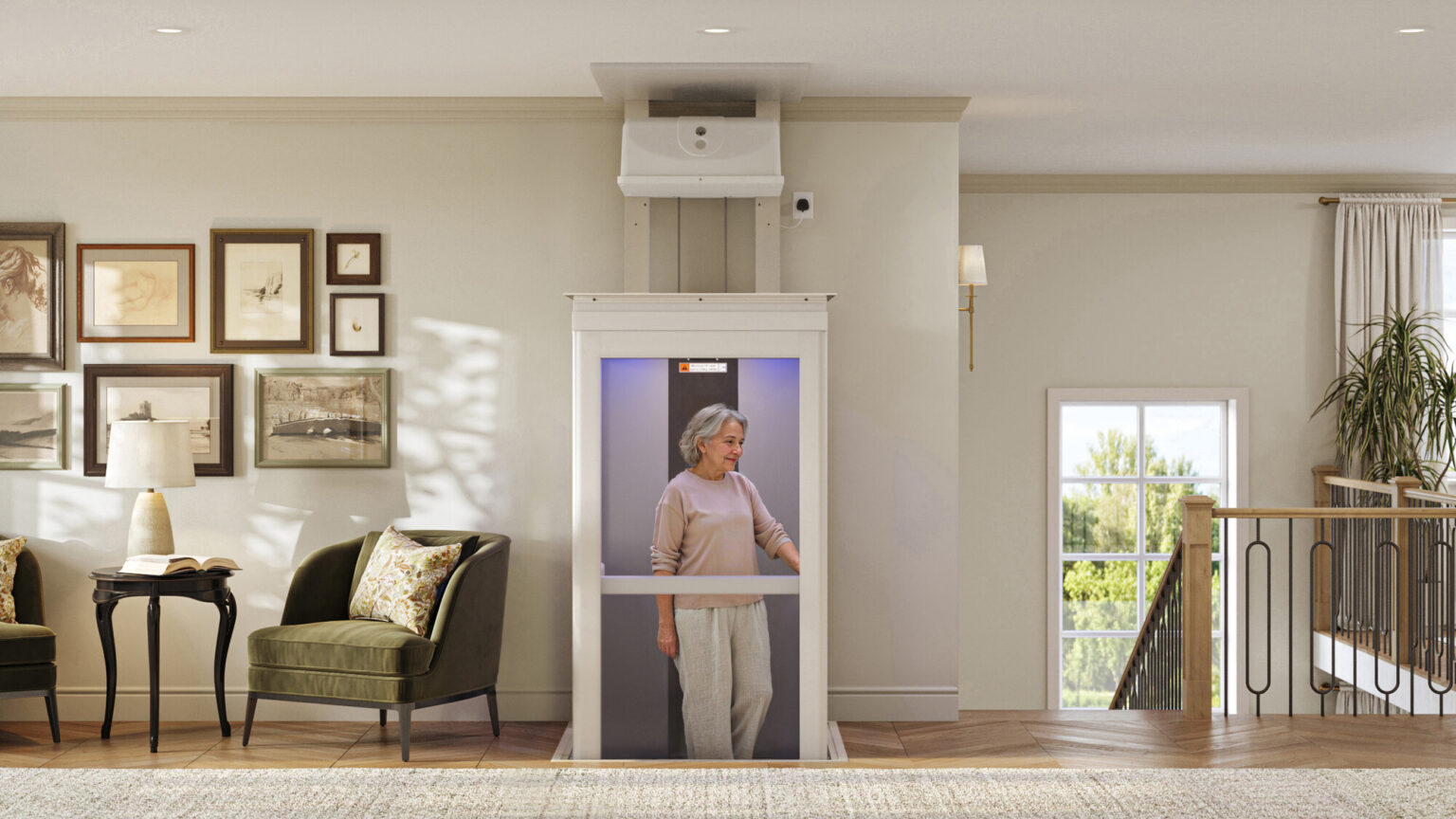
Pollock residential elevators (part of the Harmar family) are engineered specifically for the home, combining a smooth, quiet ride with the build quality and serviceability of a heritage manufacturer. The lineup spans compact retrofit-friendly cabs to fully custom multi-floor configurations, all backed by one of the broadest factory-trained installer and service networks in North America. For most homeowners, Pollock hits the rare combination of quality, capacity, customization, and long-term support that no other brand here matches across the board.
Elevator typeShaftless (Cable)
Price range$28,000 – $60,000 installed (no construction)
FootprintCompact, Twin, or Wheelchair
Warranty3-year parts
Strengths
- Best overall balance of quality, capacity, and price
- Backed by Harmar’s nationwide factory-trained service network
- Models for nearly every home — retrofit to full custom
- Smooth, quiet ride with premium cab finishes
- Highly customizable — custom RAL cabin colors, multiple cabin heights, mood lighting, floor finishes, and more
- Strong long-term parts availability and support
Considerations
- Designed primarily for two-story homes
- Full custom configurations can reach the upper price band
- Larger models may require a dedicated shaft
- Final pricing depends on home layout and finishes
Best for: Homeowners who want the strongest all-around choice — proven build quality, broad model range, and the most dependable nationwide service of any brand on this page.
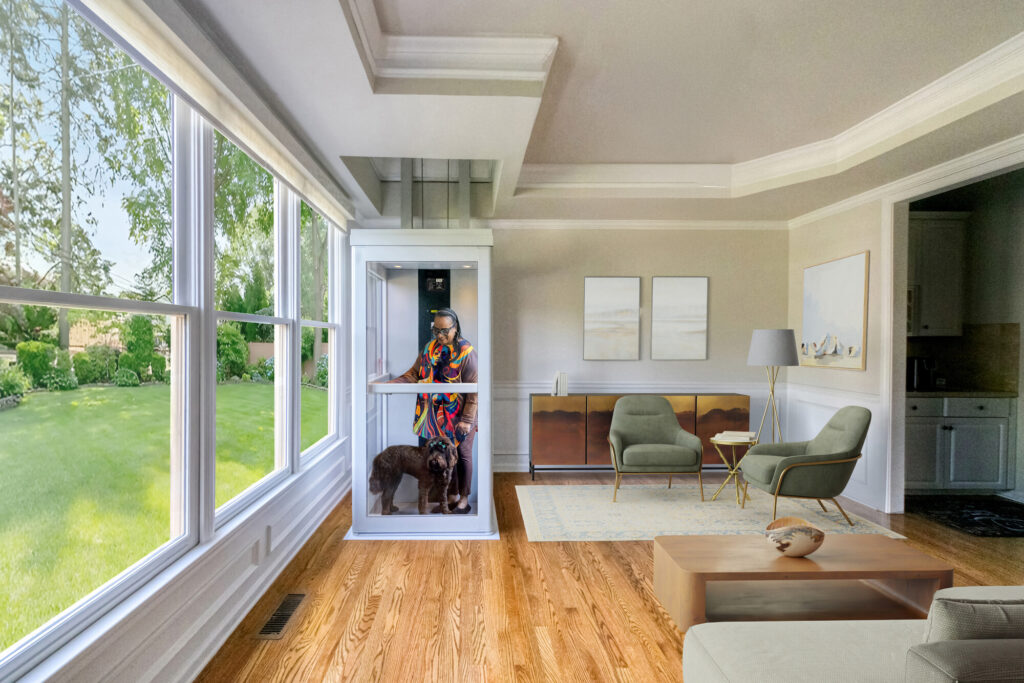
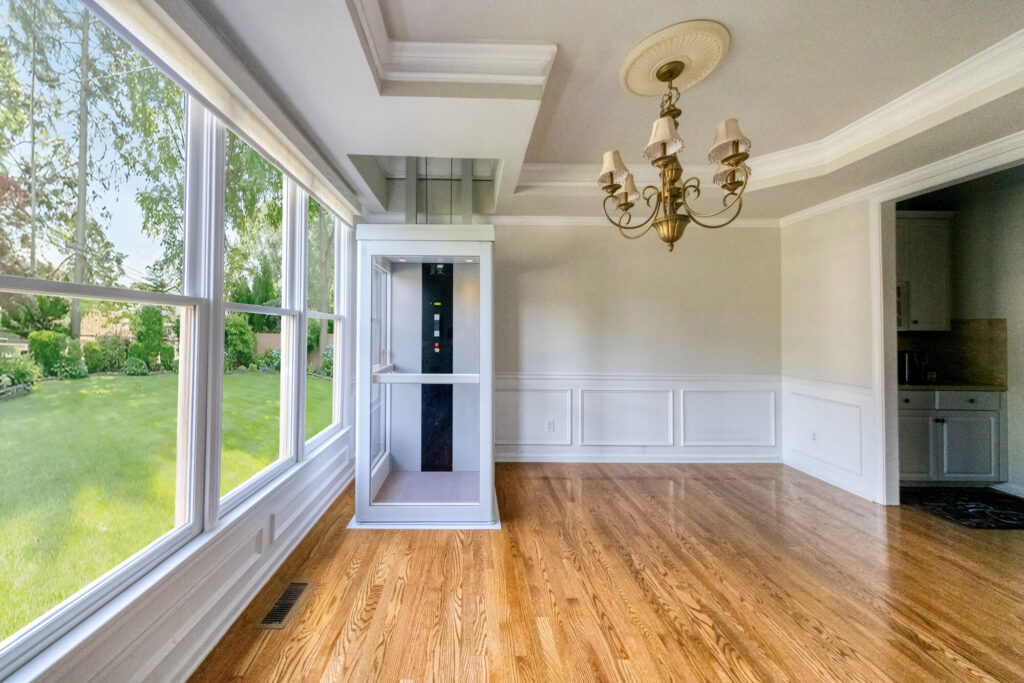
Stiltz makes shaftless home elevators (the Duo and Trio models) that run on twin rails and do not need a traditional hoistway or machine room. The cab travels through a small hole cut in the floor between two rooms. They have grown rapidly in the US retrofit market over the past decade.
Elevator typeShaftless (Cable)
Price range$27,000 – $42,000 installed
Footprint~10 sq ft, no pit or shaft
Warranty3 years parts, 1 year labor (standard)
Strengths
- One of the smallest footprints on the market
- No pit, shaft, or machine room required
- Typically 1–2 day installation with minimal construction
- Well-suited for retrofits in existing homes
Considerations
- Designed primarily for 2-floor homes
- Weight capacity is lower (Duo ~500 lbs, Trio ~660 lbs)
- Requires cutting a hole in the floor between levels
- Travel speed is slower than cable or hydraulic systems
Best for: Two-floor retrofits where minimal construction and the smallest possible footprint matter most.
Stannah has been making lifts and stairlifts since 1867. The company’s residential lift line — primarily traction-style through its Stannah Home Lifts division — is well established in the UK and Europe, with growing North American availability through partner dealers.
Elevator typeTraction / cable-driven
Price range$32,000 – $55,000 installed
Footprint12–18 sq ft, shaft required
Warranty2 years standard, extended available
Strengths
- Long company history and brand reputation
- Strong global service infrastructure
- Good multi-floor capability (up to 4 stops on some models)
- Range of cab finishes and customization options
Considerations
- US dealer network is thinner than some competitors
- Requires a proper shaft — less retrofit-friendly
- Lead times can be longer than US-made alternatives
- Service availability varies by region
Best for: Buyers who value brand heritage and plan to serve three or more floors with a traditional shaft-based install.
Savaria offers the broadest range of residential elevators of any brand in this list — hydraulic, MRL (machine-room-less), and through its Vuelift line, panoramic cylindrical models. They sell through a nationwide dealer network with strong coverage in most US metros.
Elevator typeHydraulic, MRL, panoramic (Vuelift)
Price range$30,000 – $75,000 installed
Footprint15–25 sq ft depending on model
Warranty2 years standard, 5 years on some components
Strengths
- Broadest product lineup — a model for nearly every home
- Strong US dealer network and parts availability
- Proven accessibility and aging-in-place focus
- Extensive cab finish and customization options
Considerations
- Pricing varies significantly by model and dealer
- Dealer quality and service vary by region — vetting matters
- Hydraulic models require a machine space
- Premium models (Vuelift) are among the highest-priced on the market
Best for: Buyers who want a well-known brand with a model for any footprint, and a broad installer network.
PVE pioneered the pneumatic (“vacuum”) residential elevator. The cab rides inside a transparent cylindrical tube powered by pressure differentials — no cables, no pistons, no machine room. The design is striking and the install is unusually light-touch.
Elevator typePneumatic / vacuum
Price range$40,000 – $65,000 installed
Footprint10–15 sq ft, no pit, no machine room
Warranty5 years on vacuum turbines, 3 years parts
Strengths
- Minimal construction — no shaft, no pit, no machine room
- Transparent panoramic cab is visually distinctive
- Typically the fastest install of any home elevator type
- Gravity-powered descent means no backup-power concern for emergency lowering
Considerations
- Lower weight capacity (typically 450–525 lbs)
- Smaller cab sizes than traditional elevators
- Audible vacuum pump during travel
- Proprietary components — parts and service tied to the manufacturer
Best for: Buyers who prioritize an unobtrusive retrofit and a distinctive design, and who do not need heavy capacity.
Cibes is a long-established Swedish lift manufacturer best known for screw-drive lifts and modern MRL models. Their products are heavily used in European residential and light-commercial settings; US residential availability is expanding through regional dealer partnerships.
Elevator typeScrew-drive, MRL, traction
Price range$32,000 – $60,000 installed
Footprint10–18 sq ft, low pit options
Warranty2 years standard, extended available
Strengths
- Compact footprint options, including small-pit designs
- Modern, minimalist aesthetic on cab finishes
- Low energy consumption on screw-drive models
- Generally low maintenance requirements
Considerations
- US service network is still growing — check local coverage
- Parts lead times can be longer than domestic brands
- Fewer homeowner-visible reviews in the US market
- Product availability varies by dealer and region
Best for: Design-conscious buyers who want modern European aesthetics and are willing to verify local service coverage.
Staying Home is among the newer entrants positioning themselves specifically around aging-in-place homeowners and affordability-conscious buyers. Product lineups typically center on compact, retrofit-friendly models. Because the brand is newer to the category, the trade-off for a lower entry price is a less-established service history.
Elevator typeCompact residential (model-dependent)
Price range$22,000 – $38,000 installed
Footprint~10–14 sq ft, retrofit-oriented
WarrantyVerify directly with current dealer
Strengths
- Among the lower entry prices in the residential category
- Clear focus on aging-in-place use cases
- Typically compact, retrofit-friendly models
- Direct homeowner-facing messaging
Considerations
- Shorter track record than heritage brands
- Service network and parts ecosystem still developing
- Confirm warranty terms in writing before purchase
- Ask specifically about long-term parts availability
Best for: Budget-focused buyers who prioritize upfront affordability and are comfortable vetting a newer brand’s service coverage.